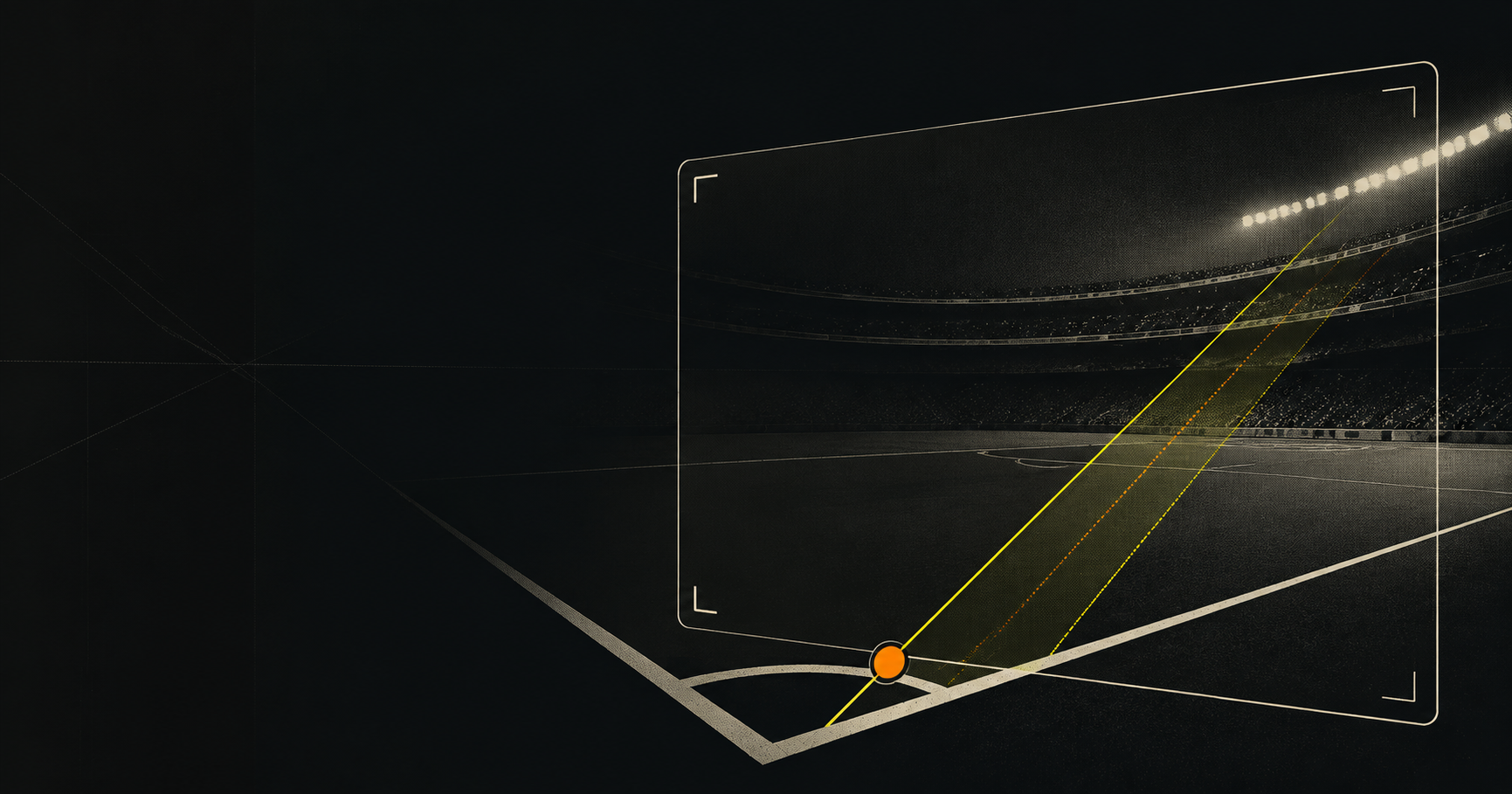
The most important technology changes are sometimes written as protocol. IFAB Circular No. 34 contains just such a change: a trial that allows the VAR to assist when an attacking player commits an offence before the ball is in play at a corner or attacking free kick, if that offence materially affects a subsequent outcome.
A narrow category with a long timeline
The trial covers an attacking-team offence before the restart that has an impact on a goal, an offence resulting in a penalty, a denial of a goal or obvious goalscoring opportunity, or an incident stopping a promising attack that results in a sending-off. It was initially used at the 2026 World Cup and competitions need IFAB permission to take part.
That may sound like a limited addition. Operationally, it extends the event window that video officials must monitor and preserve. The decisive action can occur before the ball is in play, while the match consequence arrives several seconds later.
The system boundary has moved
VAR workflows are built around clearly defined reviewable categories and trigger moments. Expanding the protocol changes operator attention, clip creation, synchronisation and communication. A production that previously treated pre-kick grappling as context may now need to hold and tag it as evidence.
This does not necessarily require new cameras. It requires confidence that the right angles are available, time-aligned and quickly retrievable. In live operations, finding the correct incident is often as important as image resolution.
Every additional review category has a hidden cost: more events to recognise, more footage to retain in working memory and more edge cases to communicate under time pressure.
Mistaken identity remains constrained
The same circular clarified that a yellow card which is not a second caution may be reviewed only to identify the player who committed the penalised offence. The offence itself cannot be changed. IFAB also noted that using mistaken identity to address simulation at the World Cup had been well received, but could not continue in that form until the wider VAR protocol review is completed.
That distinction is a reminder that technical capability and protocol authority are different. A system may show the referee what happened, while the Laws still prevent a change to the underlying decision.
The goalkeeper-injury trial is an operations story too
Circular No. 34 also introduced a separate trial aimed at tactical goalkeeper injuries. With stated exceptions, if a goalkeeper receives on-field treatment or play stops for an actual or suspected injury, an outfield player must leave for one minute.
The measure is designed as a sporting deterrent, but it creates new timing and communication requirements for officials, benches, venue displays and broadcasters. Whenever a law introduces a clock or a temporary eligibility state, the supporting information chain must be unambiguous.
What happens now
Trials are evidence-gathering exercises, not settled law. Competitions that participate will help determine whether the additional intervention produces fairer outcomes without making reviews slower or less predictable.
The technology community should watch the operating data, not only the controversy count: average review time, number of potential incidents checked, angles requested, communication delays and the frequency with which the expanded authority changes an outcome.